
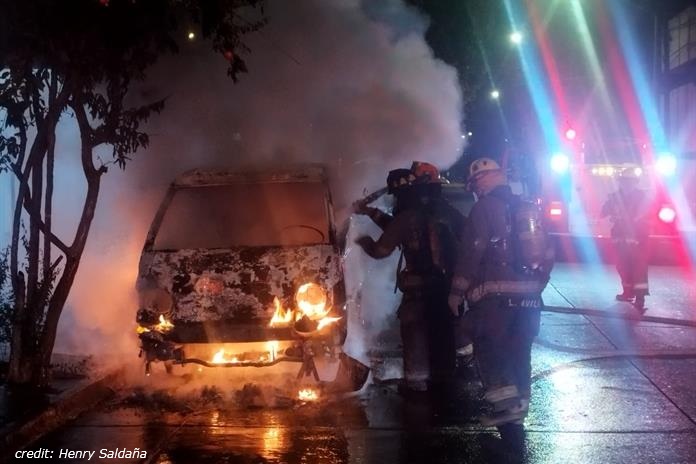
Beyond the widely shared images of burning cars and Oxxo convenience stores set ablaze, last Sunday’s violence across the Guadalajara metropolitan area (the day Mexico’s armed forces killed the CJNG’s El Mencho) took a significant toll — with the cost spanning loss of life, significant property damage, harm to the local economy, and lasting damage to residents’ emotional well-being.
The Human Toll of the Violence
According to the Secretary General of the state government of Jalisco, Salvador Zamora Zamora, a total of 57 people died in Jalisco during the government’s operation to apprehend El Mencho and in the subsequent violent response by cartel operatives.
Among those killed, 30 were armed and alleged cartel members, 25 were members of Mexico’s National Guard, one was a guard and member of the State Attorney General’s Office, and one was a civilian woman (whom several media outlets reported was pregnant) caught in crossfire.
In addition, 41 people were detained for involvement in acts of violence or looting amidst the chaos. The government also announced it had seized a handful of firearms and three tactical vehicles during its operation.
Economic Damage in Guadalajara in Excess of 100 Million Pesos (USD $5.8 million)
As for material impact, the violence across Jalisco damaged or destroyed hundreds of vehicles, 22 Banco del Bienestar branches, and 81 convenience stores were burned, with four BanCoppel stores also being damaged. The destroyed vehicles had been seized in armed carjackings on Sunday morning, then set on fire and used as so-called “narco-blockades” to cause transit paralysis. In some cases, these obstacles remained through Monday.
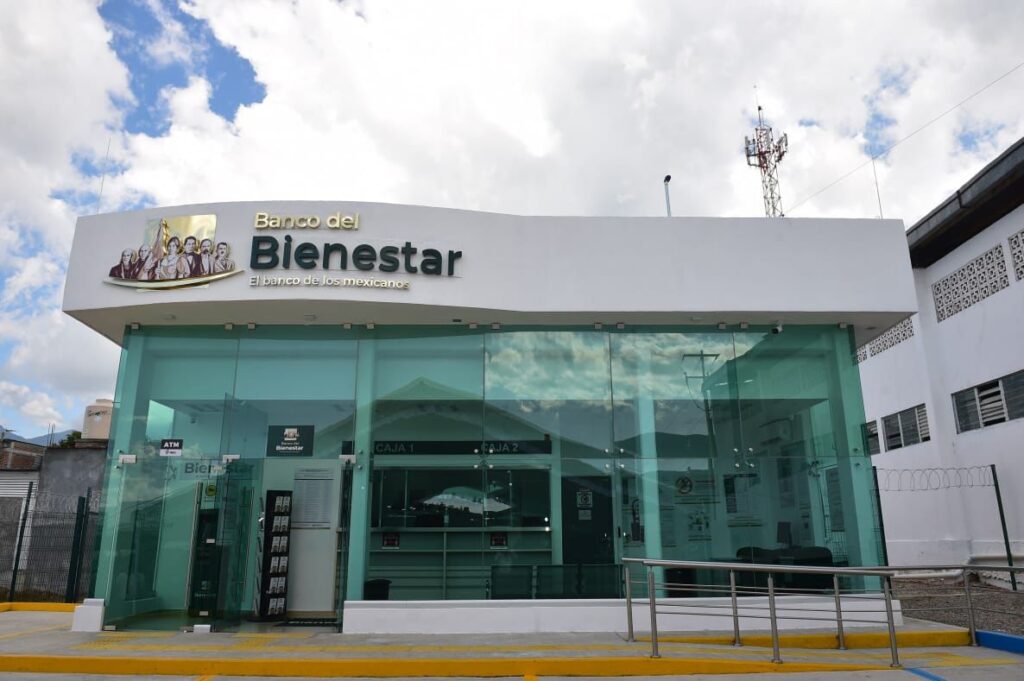
If unfamiliar, Banco del Bienestar is a government-run bank that serves rural communities with economic aid from Mexico’s Ministry of Welfare. Set up in 2019 by President Antonio Manuel Lopez Obrador (AMLO), Claudia Sheinbaum’s predecessor and mentor. Its main function is to distribute money from social programs to Mexico’s most vulnerable citizens.
The main economic sectors affected by the violence across Guadalajara were the food industry and freight transport.
According to Antonio Lancaster Jones, coordinator of the Council of Industrial Chambers of Jalisco (CCIJ), with preliminary data, the impact was in the millions due to damage and lack of production, in some cases, for several days. He noted, “We have received reports of approximately 100 million so far. We are continuing this analysis and assessment, awaiting information from all companies.”
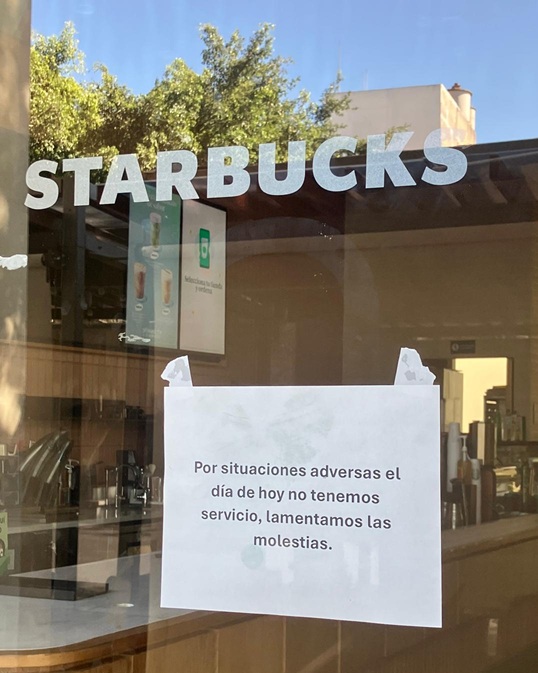
As events unfolded, there was near-total disruption to economic life. The data below was collected by COPARMEX (Confederación Patronal de la República Mexicana) an independent employer union representing over 36,000 Mexican businesses.
Last Sunday, 81% of local companies reported disruptions to operations in the form of service cancellations, cessation of operations, logistical issues, and staffing challenges as workers were unable to reach their workplaces.
On Monday, 69% of companies remained closed, while those that did operate had skeletal staffing and limited service.
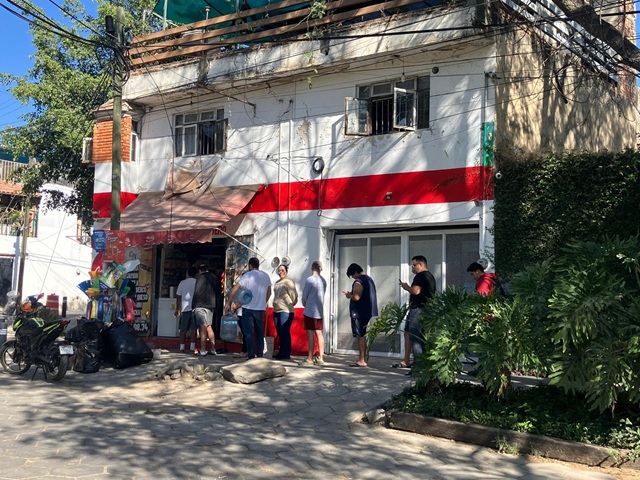
By Tuesday, nearly all businesses had resumed operations, with 4 out of 5 reporting they were back to normal, though customer-facing businesses such as restaurants and cafes remained sluggish, based on my own observations.
While assessing the damage to Guadalajara’s businesses is still a work in progress, the city suffered “invisibly” in many areas, including lost wages, lost production, and logistical headaches.
Apart from the economic impact on Mexico’s formal economy, there is additional fallout within the very sizable informal economy that’s harder to quantify.
Beyond the reach of official surveys, it’s safe to assume that significant additional income was lost by small farmers, fishermen, and dairies whose produce couldn’t be sold when tianguis (street markets) were closed.
The same is true for maids and gardeners who work in private residences but were unable to reach their workplaces due to the Code Red lockdown orders. Delivery workers who sat idle while Amazon, Rappi, and Uber Eats suspended orders also suffered losses.
Lingering Trauma for Guadalajara’s Residents
The endless stream of videos and photos illustrating roadblocks, fires, and other violence took an emotional toll on residents. Others were exposed first-hand to the mayhem.
From my own terrace, the sound of gunfire and small explosions around midday Sunday was unmistakable. It was an unsettling and surreal experience in what is normally a safe and tranquil neighborhood.
While life’s daily activities have now resumed, a sense of fear and uncertainty remains palpable. Many locals share their unease about what comes next for Guadalajara.
Of course, we take some solace from the government’s swift response to remove the blockades and increase the presence of security forces in Jalisco to help restore order. But it doesn’t negate the fact that the cartel’s grip over the community remains deeply entrenched. Many residents voice fears that it could launch a new wave of violence at any time. So there is calm, but it’s an uneasy calm.
How Will the Violence Impact Tourism to Guadalajara?
In 2025, Guadalajara received roughly 17 million visitors through its international airport, up more than 4% year over year, according to its operator Grupo Aeroportuario del Pacifico (GAP).
An even greater number is expected to descend on Mexico’s second-largest city in 2026, with the World Cup kicking off in June, set to provide a major catalyst for international visitors.
Time will tell whether Guadalajara can retain its crown as one of Mexico’s emerging tourist hotspots, driven by its vibrant culture, award-winning restaurants, hidden speakeasies, delightful climate, and locals’ zest for life.
Plenty of World Cup fans may be pondering this question right now.
With input from reports by El Occidental, Milenio, UdGTV, and Lider Empresarial.