
In a sign that living costs are rising sharply here in Mexico, last week, INEGI (Mexico’s National Institute of Statistics and Geography) announced that the country’s overall inflation rate accelerated to 4.6% in mid-March. Core inflation, which excludes energy and fresh food, rose at a 4.46% annualized rate.
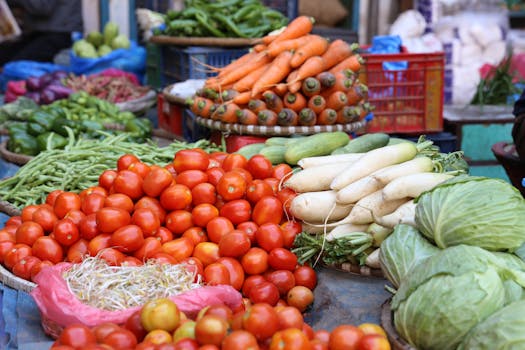
Products seeing the biggest price increases in early March were fresh fruit and vegetables (+23.9% annualized), processed food, drinks & tobacco (+5.9% annualized), and school tuition fees (+6% annualized).
Mexico’s inflation readings in the first half of March accelerated sharply compared to last month (+4.0% in February), which is a bad omen given the ongoing US-Israel-Iran war’s upward pressure on prices. Notably, the food and energy component of the index exploded to 5.2% annualized in the first half of March, from a 1.9% rate in February.

Despite Accelerating Inflation, the Central Bank Cut Interest Rates Last Week
Despite the clear acceleration in inflation, the Bank of Mexico (referred to as Banxico) decided to lower its benchmark interest rate last Thursday by a quarter point to 6.75% from 7.0%.
The move surprised most analysts, who were expecting the central bank to hold rates steady this month, given the likelihood of energy prices remaining high due to the ongoing conflict in the Middle East.
The Mexican peso’s value promptly fell more than 2% versus the US dollar as demand for the currency from financial investors cooled.
With no end in sight to hostilities between the U.S., Israel, and Iran, inflation is likely to remain high in 2026. And since interest rate cuts generally fuel inflation, Banxico’s latest move will probably add to consumers’ pain.
Why are Fruit & Vegetable Prices Rising So Fast?
Even though food is exempt from sales tax in Mexico, there is effectively a “hidden” tax on Mexican fresh fruit and vegetables, thanks to widespread extortion of agricultural producers.
Often referred to as derecho de piso (protection money) in Mexico, these non-optional payments that many farms make to criminal groups add significantly to their product costs. Popular items such as avocados, limes, agave, and chicken have been broadly affected by extortion from criminal groups involved in the “protection racket” business.
For small farms, extortion acts as a limit on what they can produce. If squeezed beyond the breaking point, small farms may shut down entirely. In either case, the result is less production and higher prices.
In the case of larger producers, these extra “operating” costs typically get absorbed and passed along to the consumer.
Investigations by El País concluded that extortion in Mexico has risen 78% over the past decade, with targeted businesses far more compliant than in decades past. Because these cases are so numerous and rarely reported to authorities, getting a handle on the full economic impact is very difficult.
But things may be starting to change.
Omar García Harfuch, Mexico’s popular Secretary of Public Security, has committed to taking on the problem. In recent months, he has launched a federal anti-extortion plan, offering police and financial intelligence to Mexican states with the biggest problems. The initiative also encourages businesses to report extortion using a newly created hotline, as many are reluctant to report these crimes locally.
Mexican Government Lowers Fuel Prices with Tax Manipulation
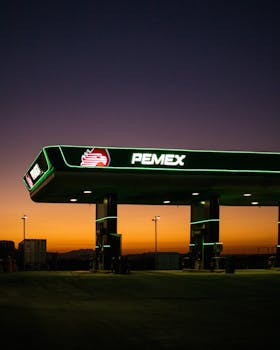
Recognizing the hardship that Mexican citizens are facing trying to cope with rising prices, the federal government this week reduced gas taxes. If you didn’t know, fossil fuels in Mexico are taxed at varying rates above the standard IVA tax assessed on most goods and services. (more on that in a minute)
According to a decree published in the Official Gazette of the Federation, the tax on regular gas was lowered 24%, 7.5% on premium gas, and 61% on diesel fuel. The move followed renewal of an agreement between the government and gas station retailers to cap the price of regular gasoline at 24 pesos a liter, which is equivalent to about US $5.10 a gallon.
These tax cuts help to offset global fuel price hikes in March. Since the war with Iran began, the price of premium gasoline has risen by around 10% across Mexico. Diesel prices, which mostly impact cargo trucks, are up about 9%.
Moreover, a massive spike in fertilizer prices globally (+50%) is expected to hit Mexico’s 2026 planting season quite hard. While some farms may shift to organic alternatives, this rising cost for growers will put more upward pressure on fresh food prices next year.

How Sales Taxes Impact Consumer Prices in Mexico
The general sales tax across Mexico, known as the Impuesto al Valor Agregado or IVA for short, is a very steep16% for most goods and services. This tax has been in place for the past 15 years (when it was raised from 10% to 16%) and is not expected to change.
Effectively a consumption tax that hits all Mexicans equally, regardless of their income, the IVA tax feels especially punitive in an environment of rapidly increasing prices for everyday goods.
Fortunately for those on a tight budget, food, medicines, and books are exempt from IVA taxes. In addition, IVA is reduced to 8% for eligible taxpayers in the northern and southern border regions.
On the other hand, the government is very heavy-handed with “vice” taxes, levying additional taxes on consumer products it deems harmful, superfluous, or undesirable. This surtax, known in Mexico as IEPS (Special Tax on Production and Services), raises prices significantly on the targeted products.
Below is a list of some of the more popular items facing IEPS, which get levied on top of the standard 16% IVA:
- Tobacco: Cigarettes and manufactured tobacco are subject to an additional 160% tax on the sale price.
- Alcoholic Drinks: Additional taxes range from 26.5% to 53%, depending on alcohol content and type.
- Junk Food: Subject to an additional 8% tax.
- Energy Drinks & Sugary Sodas: These items face a surtax per liter (approximately 1.6451 per liter in 2025).
- Gambling: Subject to an additional 30% tax.
- Telecomm Services: Subject to an additional 3% tax.
Needless to say, it pays to live clean in Mexico. And note that these taxes are unrelated to Mexican tariffs on imported products, which face their own taxes in addition to what’s presented above. Tariffs are beyond the scope of this article, but they can help explain the sticker shock I often hear from new expats in Mexico when they venture out locally in search of appliances and furnishings for their new living spaces.
Just keep in mind that the overall cost of living in Mexico remains about 40% less than life in the United States, according to data published this month by International Living.
With reporting from El País.