

We are legal temporary residents in Mexico with a U.S.-plated car here in Guadalajara on a TIP (temporary import permit). Over the years, we’ve gotten accustomed to being pulled over by the police every 6-8 weeks and asked to prove that our car is here legally.
Unbeknownst to us, something changed in early 2026. In the first week of January, we were stopped by the Guadalajara police three different times!
The first incident was on our way home from the GDL airport to retrieve a missing suitcase from my holiday trip (a story I’ll cover in a future article). A few days later, we were interrogated in the parking lot of a popular Zapopan park. Shortly thereafter, my husband got stopped on the way home from our sports club.
WTF?
There had to be a reason for all this harassment — so I started to investigate.
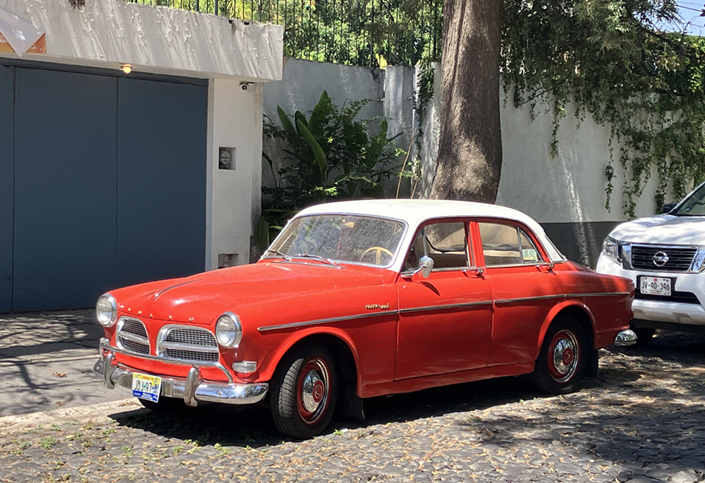
What is a “Chocolate Car” in Mexico?
For the uninitiated, a “chocolate car” in Mexico refers to illegally imported used vehicles, primarily from the U.S., that bypass customs and taxes. They’re also often called “crooked” or chueco vehicles.
Under a program decreed by the previous president, López Obrador, Mexican owners of a car originally sold in the United States or Canada could pay $2,500 pesos to regularize the vehicle’s status here in Mexico. This enabled “chocolate” vehicle owners to obtain license plates and officially register them.
As of January 1, 2026, it is no longer possible to legalize these used vehicles of foreign origin under AMLO’s old scheme, closing a multi-year cycle that allowed for the regularization of millions of illegally imported vehicles. Late last year, Claudia Sheinbaum’s government repealed the decree that legalized it.
Emphatically behind these changes is Mexico’s domestic auto industry. They argued that the decree facilitated corruption and encouraged the cross-border smuggling of vehicles into Mexico. Less credibly, they also cited the environmental impact of foreign autos with faulty mechanics.
According to government figures, from the end of 2022 until last November, 2,987,839 foreign vehicles were legalized in Mexico. Over its lifetime, the program raised a reported $7.2 billion pesos. Some of this money was allocated to road improvements, though you wouldn’t know it driving around perennially pot-hole marked Guadalajara. I suspect the funds were deployed in states other than Jalisco!
The problem for those driving foreign-plate cars in Mexico on a TIP is that they’re indistinguishable from “chocolate” cars. So when the police now see a car with a foreign plate, or a plate with its state obscured (if using a plate cover), they smell an opportunity.
For “chocolate” vehicles that were not legalized before the December 31st deadline are now considered illegal, with no possibility of legalization under the previous conditions. This means that any foreign residents with a US-plated car here on a TIP must be extra vigilant.
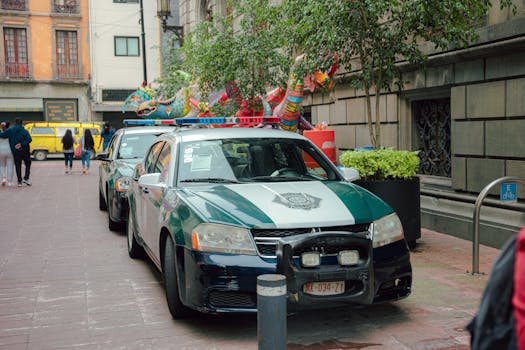
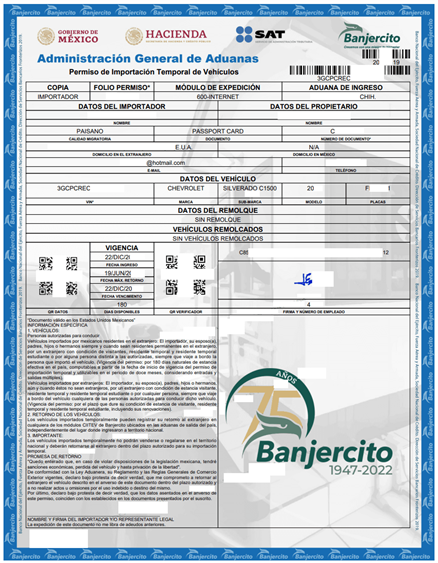
If you are pulled over by one of Mexico’s finest, you must have your original documentation from Banjercito stating your vehicle’s legal status here in Mexico under the temporary residency program. Otherwise, the police can claim that your car is here illegally and attempt to seize it.
If you managed to get updated documents from your local Aduana (customs office) after settling in Mexico, stating that your car is here legally until your temporary residency expires, that’s even better.
Here in Guadalajara, our local Aduana office is incapable of providing clear, updated documentation corresponding to our visa status (I say this from experience). Therefore, our only option is to continue showing our original Banjercito paperwork, along with our residency cards and proof of Mexican auto insurance, whenever we are stopped by the police.
And because local cops invariably know nothing about how the TIP works, you will have to explain it to them (possibly several times) until they understand it. Having a Mexican driver’s license or other local ID that shows you are a long-term resident may also help to increase your credibility in their eyes.
What you shouldn’t do when dealing with Mexican police is panic or pay a bribe. Because those who hold a valid TIP have done nothing wrong, and it does no one any good to encourage police corruption.
Does This Decree Affect the Regularization of Cars Legally Brought into Mexico?
No, it does not. According to the new guidelines published earlier this month by Mexico’s Ministry of Finance and Public Credit (SHCP), it will still be possible to legally import a used foreign vehicle into Mexico.
Owners seeking to import foreign vehicles must pay a new tariff, which varies depending on the vehicle’s age and where the owner lives. In border states, a 1% tariff will be levied on vehicles between five and nine years old, while cars older than ten years will be subject to a 10% tariff.
In all other states, owners will be required to pay 10% on cars older than eight years. Vehicles younger than these age ranges cannot be imported to protect the domestic auto industry.
The full text of the new decree can be read here.
As we look ahead to converting our residency status to permanent in 2026, one tradeoff is that we must export our US-plated car. Now, I’m actually looking forward to it.